Established as a deer park by Charles I in the 17th century, this southwest London gem offers challenging terrain, car-free sections, and iconic views, perfect for riders aiming to boost fitness and riding skills. With its 6.7 mile (10.8 km) perimeter loop and punchy climbs, it’s a favourite for interval training, endurance rides, and hill repeats. This quick guide, is tailored for cyclists focused on training, and covers key popular routes – including café stops to fuel your sessions and post-ride socials.
Why Train in Richmond Park?
Richmond Park’s well-paved roads, limited vehicle access, and varied gradients make it ideal for structured training. The perimeter loop, with climbs like Broomfield Hill (1.5 miles/2.4 km, 4-5% gradient) and Sawyer’s Hill, challenges power and endurance while offering flat sections for sprints or threshold efforts. Stunning vistas, including distant views of St. Paul’s Cathedral, and the presence of over 600 free-roaming deer add inspiration to gruelling sessions. The park also hosts organised group rides, like London Dynamo’s Saturday Park Ride, fostering disciplined training in a structured yet supportive environment. Its proximity to central London makes it a convenient urban escape for serious cyclists.
Getting Started
Cycling there is the most popular option as well as being kind to the planet. It is also accessible via Richmond Station. The park is a short ride from gates like Roehampton, Richmond, or Kingston. Drivers can park at Roehampton Gate or Pembroke Lodge, though spaces fill up fast on weekends. Ensure your bike is ready: check tires, brakes, and gears for steep climbs. Helmets, high-visibility clothing, and lights are essential for early morning or evening rides when visibility is low. Carry a repair kit for punctures and a multitool, as mechanical support is scarce inside the park.
Key Training Routes
- Perimeter Loop (6.7 miles/10.8 km): The cornerstone of Richmond Park training, this loop starts at any gate (e.g., Roehampton or Richmond) and can be ridden clockwise or counterclockwise. Tackle Broomfield Hill and Sawyer’s Hill for climbing practice, using flats for sprints or steady-state efforts and descents for active recovery. Expect other cyclists and occasional park vehicles on the road. A very popular Strava Segment is the Tour De Richmond Park. Do you know that as of 2025, there have been over 5,000,000 attempts of this Strava segment by nearly 116,000 riders.
Should you ride it clockwise or anti-clockwise? If you go clockwise, you have the toughest climb in the park to contend with – Broomfield Hill. But you then get to enjoy the long, straight descent of Sawyer’s Hill. Go anti-clockwise and you endure the long slog in the opposite direction and have the punchy climb up Dark Hill. However you get to descend Broomfield and enjoy a sprint finish to the cafe at Roehampton Gate. Try both ways or mix it up a bit for variety. - Ballet Loop (approx. 2.5 miles/4 km): Perfect for hill repeats, this loop runs from Roehampton Gate to Richmond Gate via Broomfield Hill. Attack the ascent to build power, recover on the descent, and repeat for targeted climbing sessions.
- Tamsin Trail (7.2 miles/11.6 km): A gravel path suited for mixed-surface training or recovery rides. Its flat terrain is ideal for aerobic base work, but stay alert for pedestrians, dog walkers and joggers.
Richmond Park Cycling Loop Overview
- Distance (full loop): ~10.8km
- Elevation per lap: ~130m
- Surface: Smooth tarmac
- Traffic: Restricted, but can be busy
The standard loop is:
- Anti-clockwise
- Enter via Richmond Gate or Roehampton Gate
- Includes key climbs:
- Sawyer’s Hill (main effort climb)
- Broomfield Hill (short, punchy)
1. Full Richmond Park Loop (Endurance Ride)
Best for: steady endurance, tempo riding
- Ride continuous laps of the park
- Keep effort consistent
- Ideal for building aerobic base
Typical sessions:
- 2–3 laps (20–30km) → beginner
- 4–6 laps (40–65km) → intermediate
- 8+ laps → long endurance / sportive prep
London Dynamo riders often use this as a controlled endurance session before heading into longer Surrey Hills routes.
2. Sawyer’s Hill Intervals (Climbing Session)
Best for: hill strength, VO2 efforts
Sawyer’s Hill is the main training climb in Richmond Park:
- ~1km long
- Gradual but sustained gradient
Example session:
- Warm-up: 1 lap
- Then:
- 5–8 repeats of Sawyer’s Hill
- Hard effort up
- Easy spin down
This is one of the most effective ways to build climbing strength without leaving London.
3. Richmond Park Lap Intervals (Structured Training)
Best for: race fitness, threshold work
Instead of riding easy laps, use each lap as an effort block.
Example session:
- Lap 1: warm-up
- Lap 2–4: threshold pace
- Lap 5: recovery
- Lap 6–7: hard efforts
Many London Dynamo group sessions are structured around multi-lap efforts like this, especially in winter and early season.
4. Chain Gang / Fast Group Laps
Best for: speed, group riding skills
Richmond Park is ideal for:
- Paceline riding
- High-speed group efforts
Typical format:
- Small group (4–8 riders)
- Rotating turns on the front
- Continuous high pace
This simulates real club riding conditions.
How London Dynamo Riders Train in Richmond Park
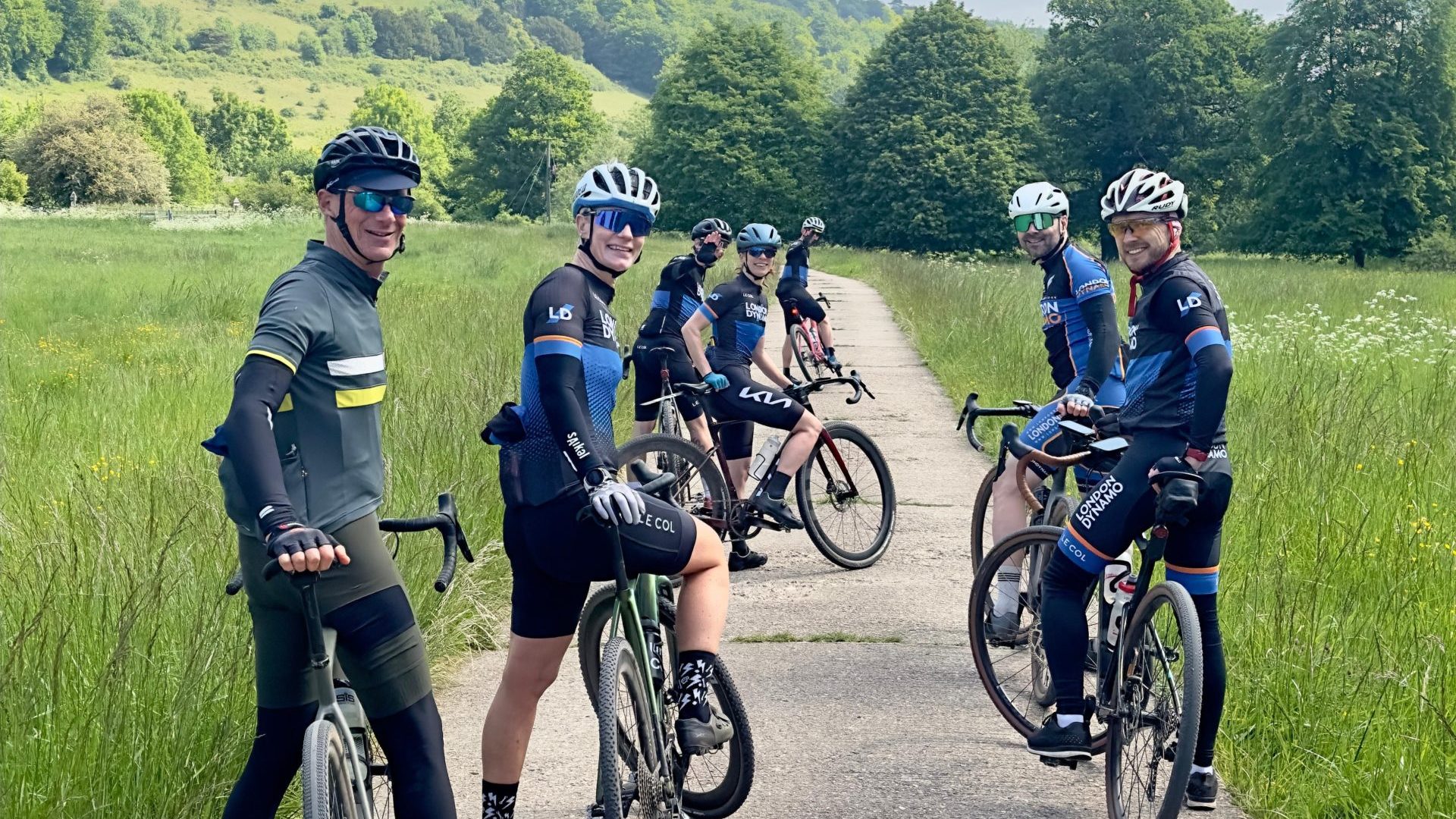
Saturday Park Ride: This iconic weekly ride offers structured group training. Meeting at Pen Ponds Café car park, groups of 6–8 ride four anticlockwise perimeter laps (26 miles/42 km total) in a Through-and-Off paceline (also known as a Chain Gang). It’s ideal for practicing group dynamics, improving cadence, and building endurance.
Richmond Park is a key part of London Dynamo’s training:
- 4 lap sessions (~40–65km)
- Used for:
- All season fitness
- Structured interval work
- Group riding drills
Café Stops for Refueling and Post-Ride Socialising
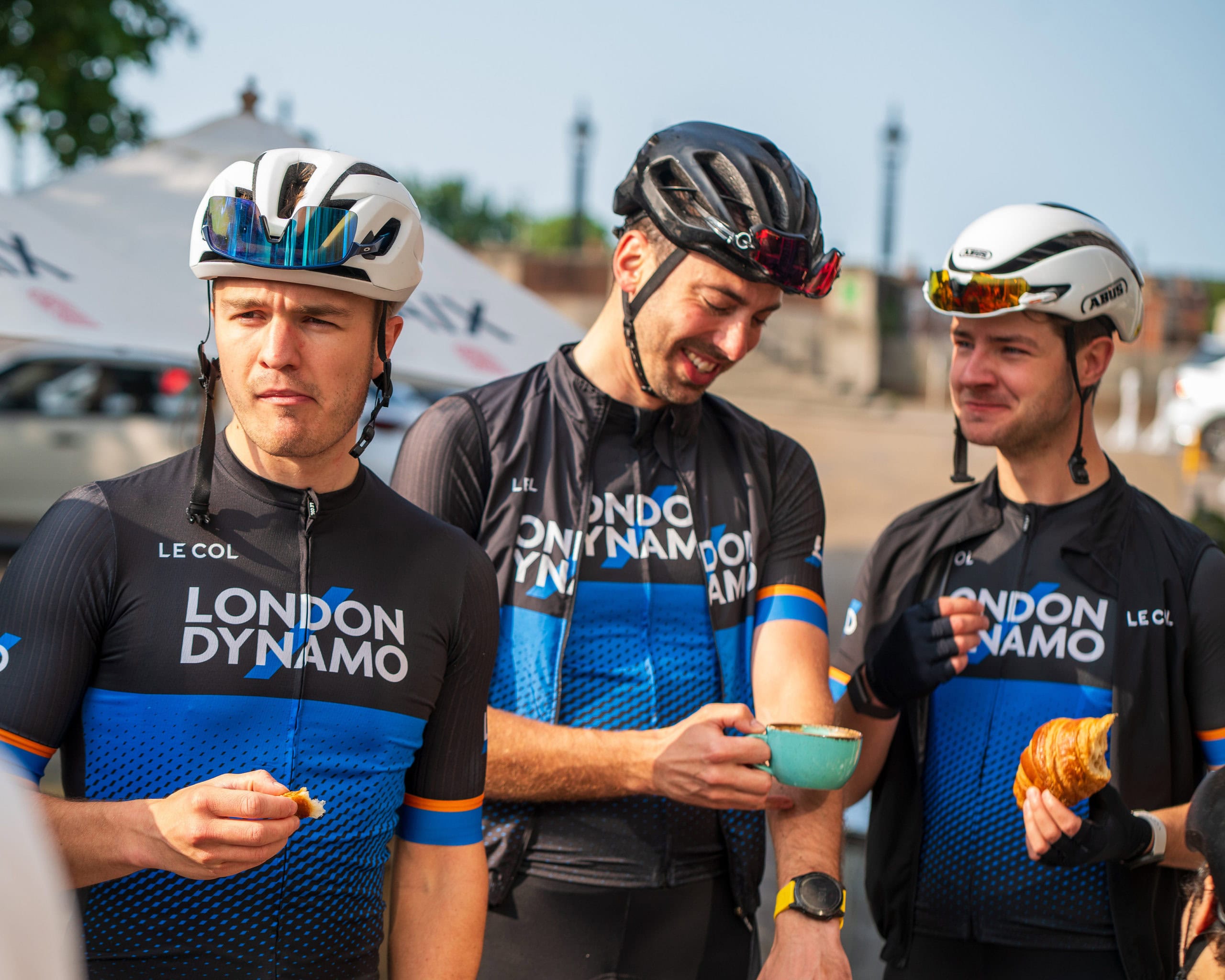
- Pembroke Lodge Café (near Pembroke Lodge, TW10 5HX): A cyclist favourite, offering strong coffee, pastries, and hot meals like sandwiches, soups, or jacket potatoes. Open 9:00 AM–5:30 PM (or dusk), it’s perfect for mid-ride refueling with panoramic Thames Valley views, ideal for a quick break during long sessions.
- Roehampton Gate Café (Roehampton Gate, SW15 5JR): A convenient stop for pre- or post-ride fuel, serving espresso, cakes, wraps, and light bites. Open 8:00 AM–5:00 PM, it’s a popular meet point for group rides like London Dynamo and suits riders starting at Roehampton Gate.
- In addition to the main cofffee shops, there are also four kiosks dotted around the park – Pen Ponds, Ham Gate, Kingston Gate and Broomfield Hill.
Tips
- Timing: Hit the park at 7:00 AM (7:30 AM in winter) when gates open for quieter roads and optimal training conditions. Avoid crowded weekend afternoons. Always go early to avoid traffic.
- Intervals: Use Broomfield Hill for climbing intervals or the perimeter’s flats for high-intensity sprints. The Ballet Loop is excellent for VO2 max efforts.
- Safety: Equip lights and reflective gear for low-visibility rides. Monitor weather to avoid slick roads, and always carry a spare tube and pump. Always obey the speed limits.
- Animals: Watch out for wandering deer – they tend to cross the road without notice.
- Descents: Check weather forecasts, as wet roads and leaves can make descents slippery, especially in the winter.
Final Thoughts
Richmond Park is a cyclist’s training haven, blending challenging climbs, fast flats, and minimal traffic. By respecting the Royal Parks Code of Conduct and refueling at Pembroke Lodge or Roehampton Gate, you’ll maximise your sessions. Whether grinding out hill repeats on the Ballet Loop, joining London Dynamo’s Saturday Park Ride, or pushing watts on the perimeter loop, Richmond Park offers an unrivalled cycling experience for dedicated riders.